
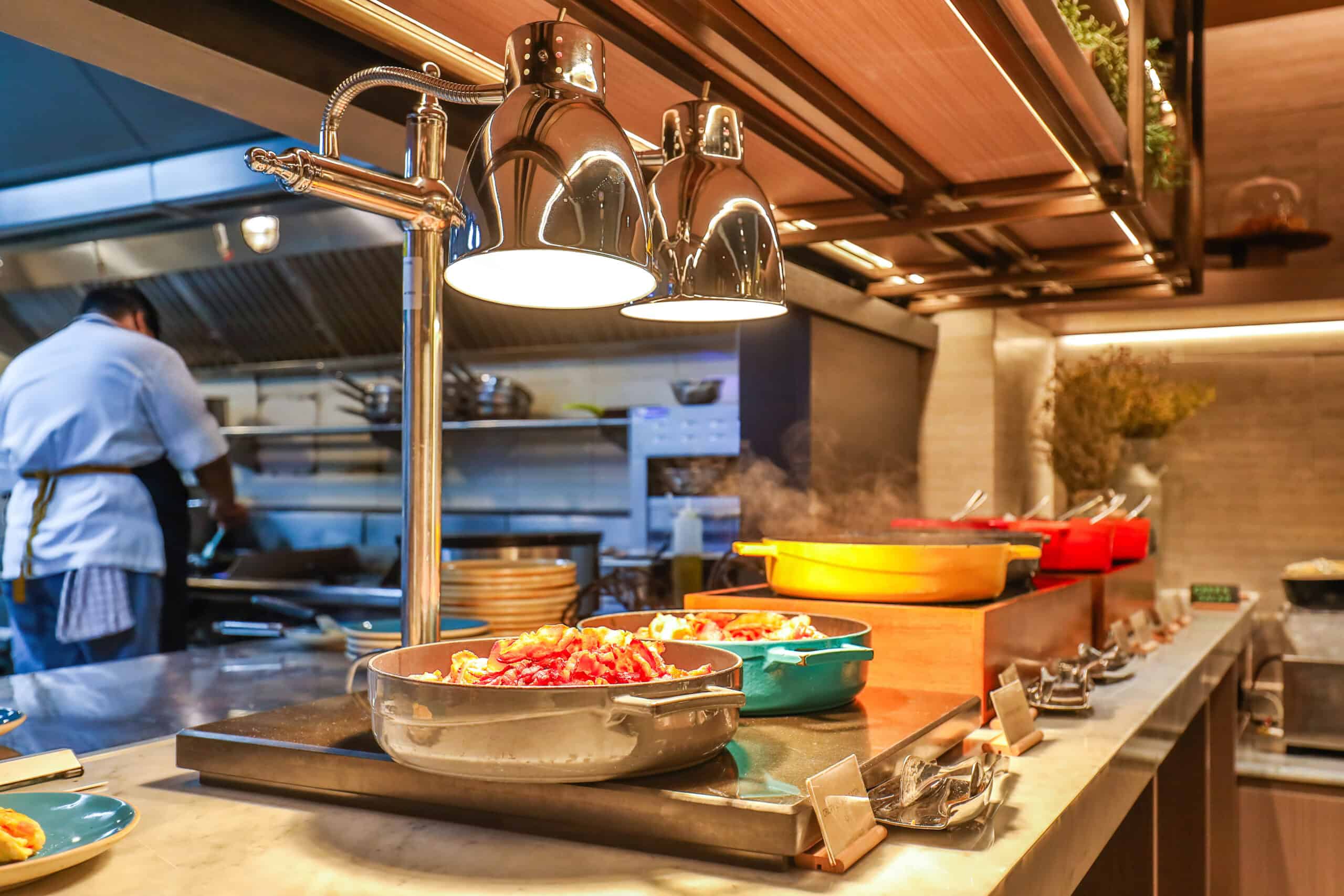
Why food prep and holding deserve a second look — and a category of their own.
Nobody brags about their holding cabinet. Yet at 6 p.m., that cabinet is quietly deciding whether the food you cooked hours ago is still safe to serve. Prep and holding are the quiet half of the kitchen: rarely the star of a renovation, almost always where the day-to-day wins are won or lost.
Foodservice operators tend to think first about cooking, refrigeration, and dishwashing, because those categories are visible and easy to define. But some of the most important operational gains happen before and after the cooking step. Better prep equipment reduces labour, improves consistency, and shortens ticket times. Better holding equipment protects food quality, yield, and safety, shift after shift. That is why R.E.D Canada’s newest buying guide treats prep and holding as one connected category, not two unrelated equipment lists.
Prep sits on one side of the cook. Holding sits on the other.
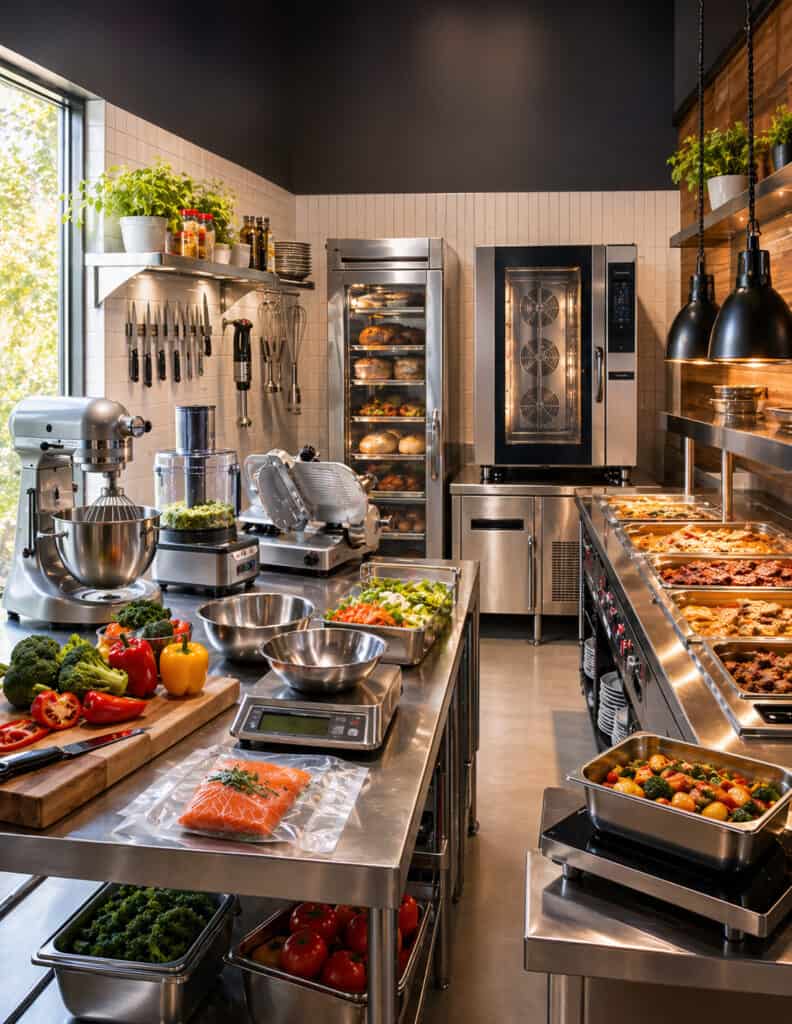
Before the line can fire consistently, ingredients have to be mixed, cut, weighed, portioned, and staged. A mixer, slicer, food processor, or vacuum sealer turns that craft into a repeatable, controllable process instead of a bottleneck that depends on one skilled pair of hands. Once food is cooked, it often has to be held, transported, rethermed, or merchandised without losing quality — whether it is bridging one service into the next or moving from a commissary to a satellite location. Get either side wrong and the cost shows up in labour hours, wasted product, and inconsistent plates.
Holding is a food-safety line, not a nice-to-have
This is the part of the category that is not optional. In Canada, local Public Health authorities set the parameters a foodservice operation must meet, and hot holding has a hard floor.
If a holding unit cannot keep product at or above 60°C (140°F), it is not holding safely. That is not a preference — it is food safety.
Equipment that is designed with sanitation in mind — smooth food-contact surfaces, removable parts, accessible cleaning and calibration points, and NSF certification for commercial use — pays back every single service. If a unit is hard to clean, it will not be cleaned as often as it should be.
One guide, from immersion blender to banquet cart
Prep and holding cover an enormous price and complexity range, from a countertop immersion blender to a floor-standing spiral mixer to a full banquet cart fleet. The Food Prep & Holding Equipment guide walks through both sections in detail — food processors, bowl choppers, planetary and spiral mixers, slicers and portioning, vacuum sealers and sous-vide, scales, heated holding cabinets and proofers, cook-and-hold ovens, retherm equipment, heat lamps, induction warmers, steam tables, hot merchandisers, and mobile holding — with comparison tables and best-investment guidance by operation type.
8 questions to ask before you buy
The price range is enormous, but the framework for buying well is the same. Work through these eight categories with your R.E.D dealer before you commit:
1. Menu and application: What are you prepping or holding most often, and does it change through the equipment’s life?
2. Throughput and production volume: What peak output must the equipment support, and how often does it run?
3. Space and layout: Footprint, door-swing, loading, mobility, and where attachments live at point of use.
4. Utilities and ventilation: Voltage, phase, amperage, dedicated circuits, drains, water feeds, and ventilation.
5. Food safety and sanitation: NSF certification, cleanable surfaces, accessible probes, and allergen segregation.
6. Ergonomics and labour: Loading height, readable controls, fewer manual touches, and manageable noise.
7. Cleaning and maintenance: Break-down time, dishwasher-safe parts, and who owns preventive maintenance.
8. Service, parts and total cost of ownership: What the warranty really covers, regional service strength, uptime, and 5-to-10-year running cost.
The guide is now live
Food Prep & Holding Equipment is our fourth in a series of buying guides. Like every guide in the series, it is built to help Canadian operators invest well, protect quality, and give their teams the tools to succeed — not to sell a brand. Read it free, and find the R.E.D member dealer closest to you.
